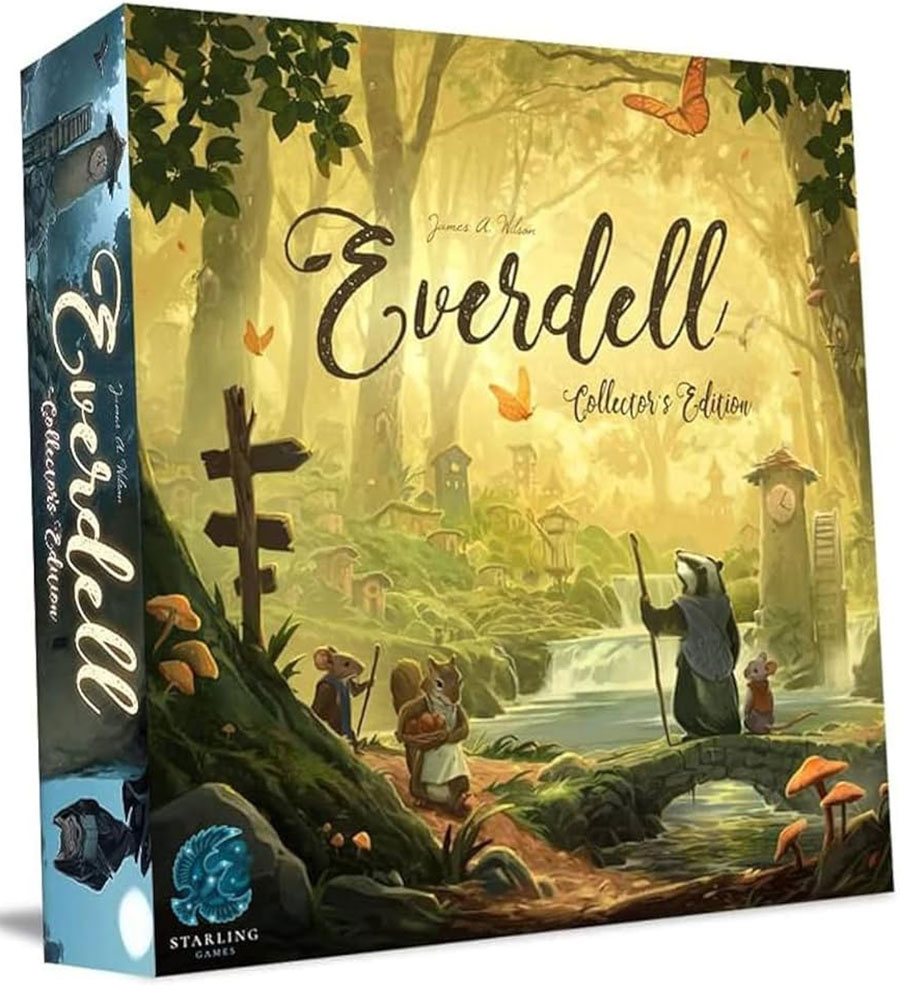
The Collector's Edition of Everdell includes everything in the standard edition, plus the 10 card Legends expansion, 15 Extra! Extra! cards, 30 metal tokens, and an upgraded 8-sided die. This is all contained in a UV spot-coated box and a Gallery slipcase.
Within the charming valley of Everdell, beneath the boughs of towering trees, among meandering streams and mossy hollows, a civilization of forest critters is thriving and expanding. From Everfrost to Bellsong, many a year have come and gone, but the time has come for new territories to be settled and new cities established. You will be the leader of a group of critters intent on just such a task. There are buildings to construct, lively characters to meet, events to host—you have a busy year ahead of yourself. Will the sun shine brightest on your city before the winter moon rises? Everdell is a game of dynamic tableau building and worker placement. On their turn a player can take one of three actions: a) Place a Worker: Each player has a collection of Worker pieces. These are placed on the board locations, events, and on Destination cards. Workers perform various actions to further the development of a player's tableau: gathering resources, drawing cards, and taking other special actions. b) Play a Card: Each player is building and populating a city; a tableau of up to 15 Construction and Critter cards. There are five types of cards: Travelers, Production, Destination, Governance, and Prosperity. Cards generate resources (twigs, resin, pebbles, and berries), grant abilities, and ultimately score points. The interactions of the cards reveal numerous strategies and a near infinite variety of working cities. c) Prepare for the next Season: Workers are returned to the players supply and new workers are added. The game is played from Winter through to the onset of the following winter, at which point the player with the city with the most points wins.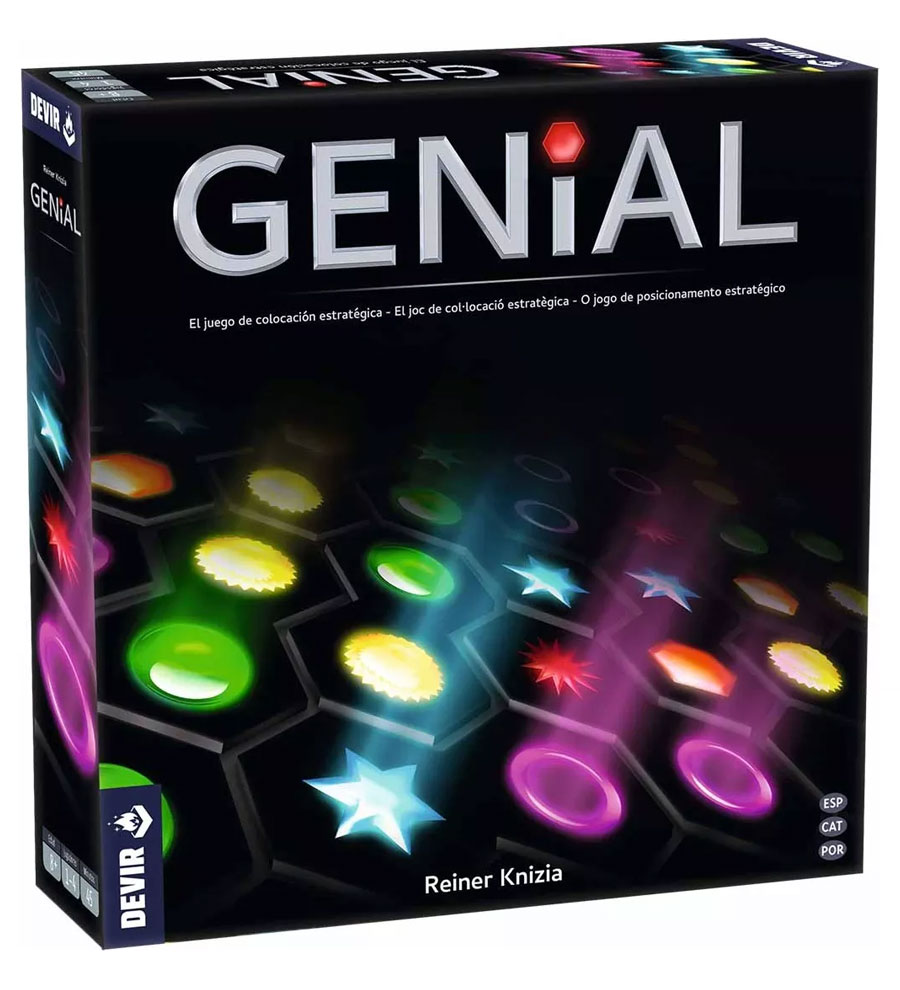
In Ingenious, a.k.a. Einfach Genial, players take turns placing colored domino-style tiles on a game board, scoring for each line of colored symbols that they enlarge. The trick, however, is that a player's score is equal to their worst-scoring color, not their best, so they need to score for all colors instead of specializing in only one or two. In more detail, the game includes 120 domino-style tiles, each consisting of two conjoined hexes; each hex has one of six colors in it, with most tiles having different-colored hexes. Each player has a rack with six tiles on it, and on a turn a player places one tile from their rack onto two hexes of the game board. For each hex on this tile, they score one point in that color for each hex of the same color that lies adjacent to it and each hex in a straight line from it. If a player brings the score of a color to 18, they immediately take another turn. At the end of their turn, they refill their rack to six tiles. (Before refilling their rack, if they have no tiles on it that contain hexes in their lowest-scoring color, they can discard all of their tiles, then draw six new tiles from the bag.) When no more tiles can be placed on the game board or when one player scores 18 in each color, the game ends. Players then compare their lowest scores, and whoever has the highest low score wins. Ingenious includes rules for solitaire and team play; in the latter case, two teams of two play, with each player not being able to see their partner's tiles and teams keeping a combined score that maxes out at 36 instead of 18.
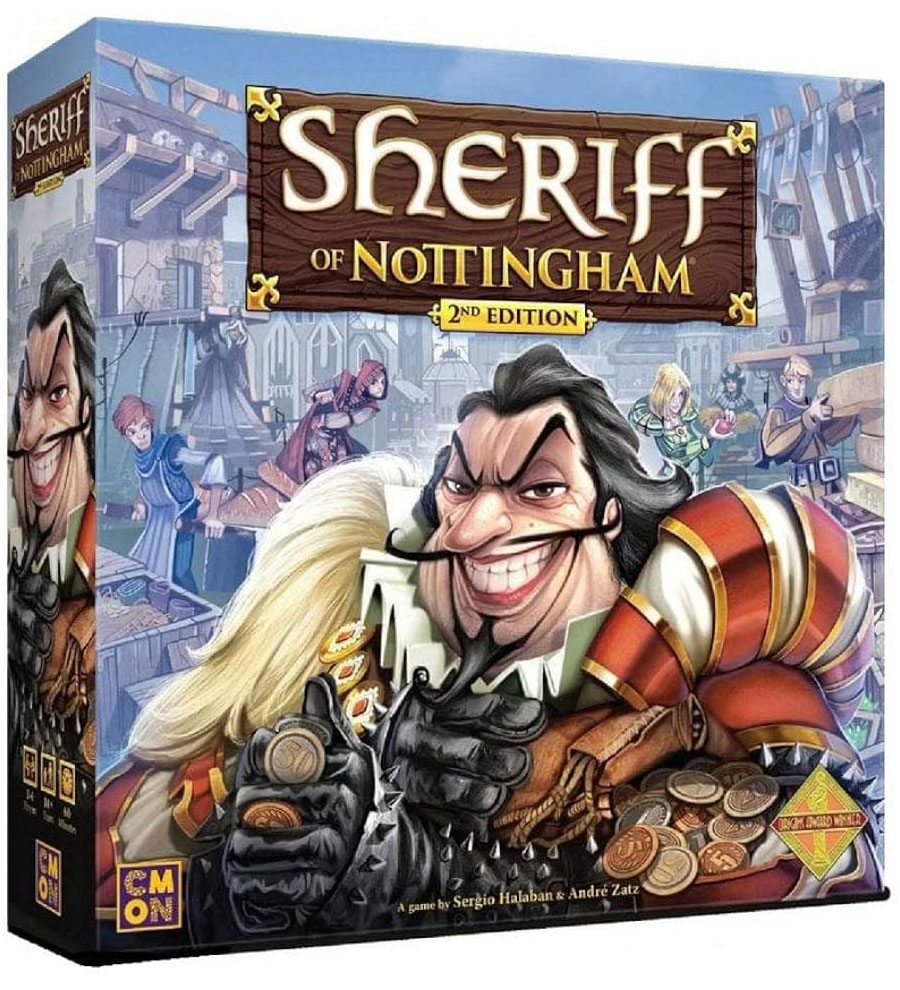
Will the Merchants get their goods past the Sheriff? The bustling market in Nottingham is filled with goods from all over the kingdom. Most of it is entirely legal, however, Prince John is looking to make sure no contraband gets sold. He’s tasked the Sheriff to inspect Merchant’s wares, looking for any illicit goods. The Sheriff’s shrewd, but not above taking a bribe to look the other way. Which Merchant will end up getting the best goods through and make the largest profits in the market stalls? In Sheriff of Nottingham 2nd Edition, players take turns playing the Sheriff, looking for contraband goods, and the Merchants trying to stock their Stall with the best goods. The Sheriff can inspect any bag they want, but they must be careful, as they’ll have to pay a penalty if they find the Merchants were telling the truth. This new edition includes updated rules, as well as expansions such as the 6th Merchant, Black Market, and Sheriff’s Deputies. The game box contains 110 Gold Coins, 216 Goods cards, 6 Deputy cards, 6 Black Market cards, 2 Deputy standees, 6 Merchant stands, 6 Merchant bags, a Sheriff standee, a Booty tile, and a rulebook
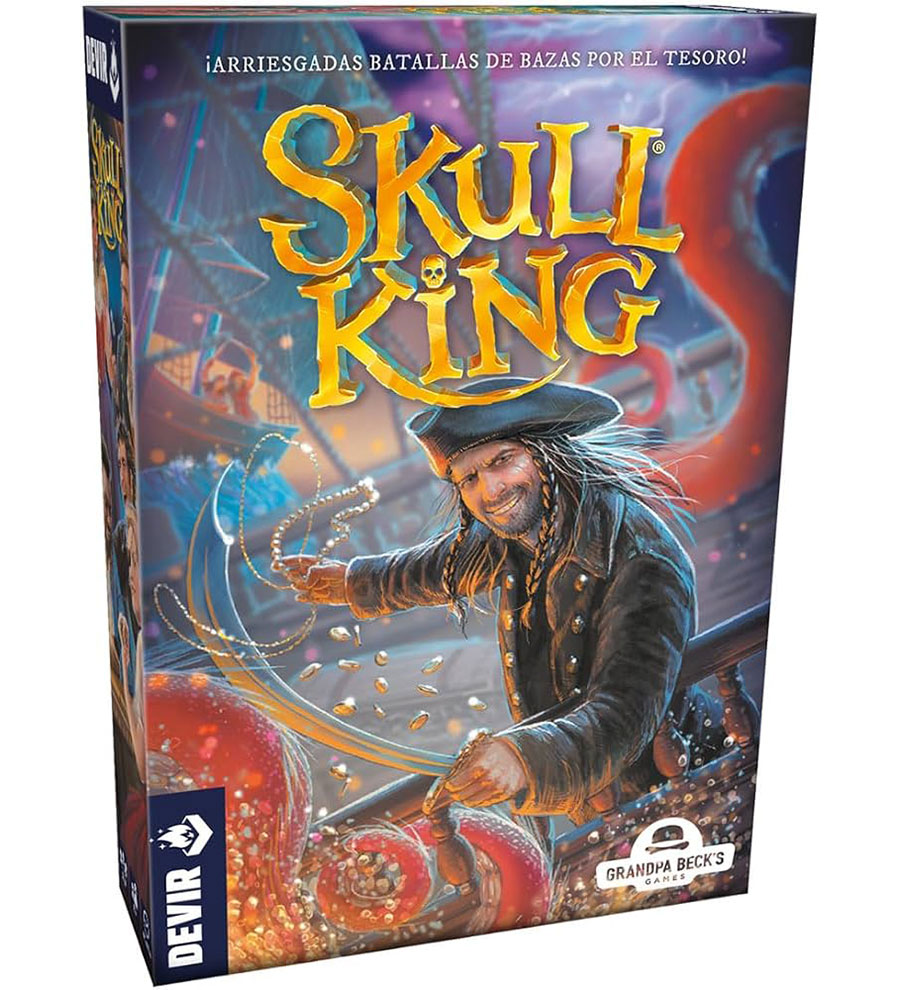
Skull King is a trick-taking game similar to Oh Hell!, Wizard, Euchre and Spades, with players needing to state how many tricks they think they'll win each round. A unique element of this game is that bidding takes place simultaneously, leading to rounds that are sometimes over, or under-bid. As players must win the exact number of tricks that they bid to earn points, winning too many tricks is just as bad as winning too few and this leads to intense competition where losing a trick can be as exciting as winning one. Skull King uses a 66-card deck that consists of five Escape cards, four suits numbered 1-13, five Pirate cards, 1 Tigress card, and 1 Skull King card. The game lasts ten rounds, and in each round, each player is dealt as many cards as the number of the round. All players simultaneously bid on the number of tricks they think they'll take by holding out a fist and on the count of three revealing a certain number of fingers (or possibly a closed fist for a bid of zero tricks). Standard rules apply for the playing of cards, with one player leading off a card and other players following suit, if possible, and playing something else if not; however, a player may always choose to play one of the special, unnumbered cards — and the power of those cards might let you win a trick that otherwise would have gotten away. In more detail, the black Jolly Roger suit trumps the other three suits, a Mermaid trumps all numbered cards, a Pirate trumps the Mermaid, and the Skull King trumps everything — except if he appears in the same trick with a Mermaid, in which case she captures him and wins instead. An Escape card loses to any other card, and the Tigress card serves as either a pirate or escape card as desired by the player. Whoever wins a trick leads in the next trick. If a player makes their bid exactly, they score 20 points per trick; if they collect more or fewer tricks, they lose 10 points per trick they are off. If a player makes a bid of zero tricks, they win points equal to ten times the current round number — but if they take even a single trick, they lose this many points instead. If a player catches pirates with the Skull King, or the King with a mermaid, they score bonus points. Whoever has the most points after ten rounds wins.


ABOUT
STORE
NEWS
CONTACT
© 2012 - 2026 • Avada is a Website Builder for WordPress and eCommerce • All Rights Reserved • Developed by ThemeFusion